

Equipping Leaders for Accessible Children's Ministry
Reflections on the class I taught, and an invitation to join me for what's next.

Last week I wrapped up my first semester as an adjunct at SWBTS, and I wanted to reflect on the class I taught so I can remember what went well and what needs adjustments. I thought it would be helpful to share here since other schools are developing and expanding their programs and class options in the field of disability ministry as well.
Background and Set Up:
Equipping Leaders for Accessible Children’s Ministry was a master’s level class for those in the children’s ministry program. We had a mix of students in the classroom and online. I taught via Zoom, and my co-professor (Dr. Kennemur) was in the classroom on campus. The students represented five countries with different ministry experiences and plans for the future.
I based the course on my book, Accessible Church. I first started teaching the topics years ago for cohorts with Gospel-Centered Family. Then I adapted it for a class I teach at Liberty, Accessibility and Inclusion in Church Ministry. And then it became the content for my book. Even though this class was for children’s ministry leaders, we did talk about inclusion beyond children’s ministry because at many churches, disability ministry falls under children’s ministry even though it serves teens and adults. (For example, at my church, our part-time disability ministry director reports directly to the children’s ministry director.)
The Book List:
Beates, Michael S. Disability & the Gospel: How God Uses Our Brokenness to Display His Grace. Crossway, 2012.
Hubach, Stephanie O. Same Lake, Different Boat: Coming Alongside People Touched by Disability, Revised and updated. P&R Publishing, 2020.
Peoples, Sandra. Accessible Church: A Gospel-Centered Vision for Including People with Disabilities and Their Families. Crossway, 2025.
Additional reading:
Theology of Disability: The Ten Pillars from the Wheaton Center for Faith and Disability
The 5 Stages of Changing Attitudes toward Disability by Dan Vander Plaats
“Salvation for Children with Disabilities” by Sandra Peoples in Children and Salvation: Biblical Theological, and Practical Considerations.
They chose one of the following for a family-focused book review:
Unbroken Faith by Diane Dokko Kim
The Life We Never Expected by Andrew Wilson and Rachel Wilson
Wrestling with an Angel by Greg Lucas
How to Build a Thriving Marriage as You Care for Children with Disabilities
by Kristin Evans and Todd Evans
Sharing Love Abundantly in Special Needs Families: The 5 Love Languages® for Parents Raising Children with Disabilities by Gary Chapman and Jolene Philo
ThM students had to pick two of the following books and write reviews:
Disability and the Church: A Vision for Diversity and Inclusion by Lamar Harwick
Disability: Living into the Diversity of Christ’s Body by Brian Brock
Jesus and Disability by Chris Hulshof
They had a reading schedule for the semester, and the lectures were based on their assigned reading. They read Beates’ book first, then Hubach’s book. They read the chapters of my book that corresponded to the week's topics. Their presentations on the family-focused book were due after spring break. Each week, they had to post reflections either on the reading or on our class lectures.
Guest Speakers:
Charla Holst from Overcomer Ministries spoke on meeting sensory needs and creating sensory spaces. It was very helpful, and the students talked about what they learned from her for weeks after.
We hosted a panel discussion with Gary Felton (FBC Dallas), Kathy Kovalchuk (Prestonwood Baptist Church, North Campus), and Juliana Wootten (The Village) so the students could get an idea of what disability ministry looked like at different churches.
Diane Dokko Kim, author of Unbroken Faith, joined us to talk about her experience as a mother and a ministry leader. Diane was especially helpful in speaking about how various cultures respond to disability, reminding us of the strengths other cultures bring and the challenges we may face as we minister cross-culturally.
Assignments and Presentations:
My goal with the assignments was to have real-world application. I think overall they went really well. Here’s what was required:
Write a theology of disability paper: They first brought an outline of their papers with the passage they chose to write about, a thesis statement, and a bibliography. We split into groups to discuss them. Then they wrote their papers. The length and requirements were based on the degree they were getting (MACE, MDiv, or ThM).
Present their theology of disability papers in 3-5 minutes with a PowerPoint or a handout that includes the biblical passage chosen, the central theological claim about disability, and one implication for church practice or pastoral care.
Write a ministry proposal letter to a pastor, communicating the need for a disability ministry and the purpose of a disability ministry. Students will include population statistics from their class textbooks and update them with an internet search if necessary.
Create ISPs for fictitious ministry participants. I provided profiles of three ministry participants, and the students created an individualized spiritual plan for their time at church. They included:
1. Classroom placement (inclusive, specialized, both)
2. Ways to encourage positive behavior and who is necessary to support this behavior
3. Sensory items and/or tool options needed
Read a family-focused book and present a review, including biographical information about the author(s), the purpose of the book, strengths and weaknesses of the book, three quotes from the book that were helpful and why, and if you would recommend the book to parents in your ministry. They signed up for which book they wanted to read, with a limit of 2-3 people reading each one. The groups were put together to include at least one person who had read each book, so everyone could benefit from the reviews.
Plan an outreach event and present the idea in class. Students will create a document that answers questions about planning an outreach event targeting special-needs families. The student will demonstrate their understanding of the importance of creating an inclusive event, advertising the event, and following up after the event. In class, students will role-play as a church staff member during a staff meeting. Each student will present their idea. The group will respond with questions, playing their part as other staff members.
Post learning engagement reflections each week
Reflections & Things I Would Do Differently
One big challenge is starting the semester with the hardest assignment—the theology of disability paper. But it has to come first because it’s the foundation for everything we do. I know it can feel intimidating, which is why we looked at the outline and bibliography together. That way I could give feedback before the final draft.
Having a clear AI policy will be helpful next time. To help me determine if it’s being overused, I put each assignment description and requirements into ChatGPT and Claude to see what those sites write in response. In the future, I will require the students to state the number of pages they read of the family-focused book in the document they turn in.
For the ISP assignment, I provided a worksheet to help make sure they covered everything I wanted, but it was optional. I’ll either require it for everyone or not provide it at all.
For the outreach presentation, when they roleplayed staff members, we assigned them the roles of lead pastor, youth/next gen, worship/tech, social media, deacon team, admin assistant, women’s ministry director, men’s ministry director, hospitality team/kitchen, and counseling and care. We started with three “staff members” asking one question after each presentation (the roles rotated each time). It went great, but we ran out of time (we had scheduled two class periods to present). I think asking three questions was good, but we’ll need more class time to get it done.
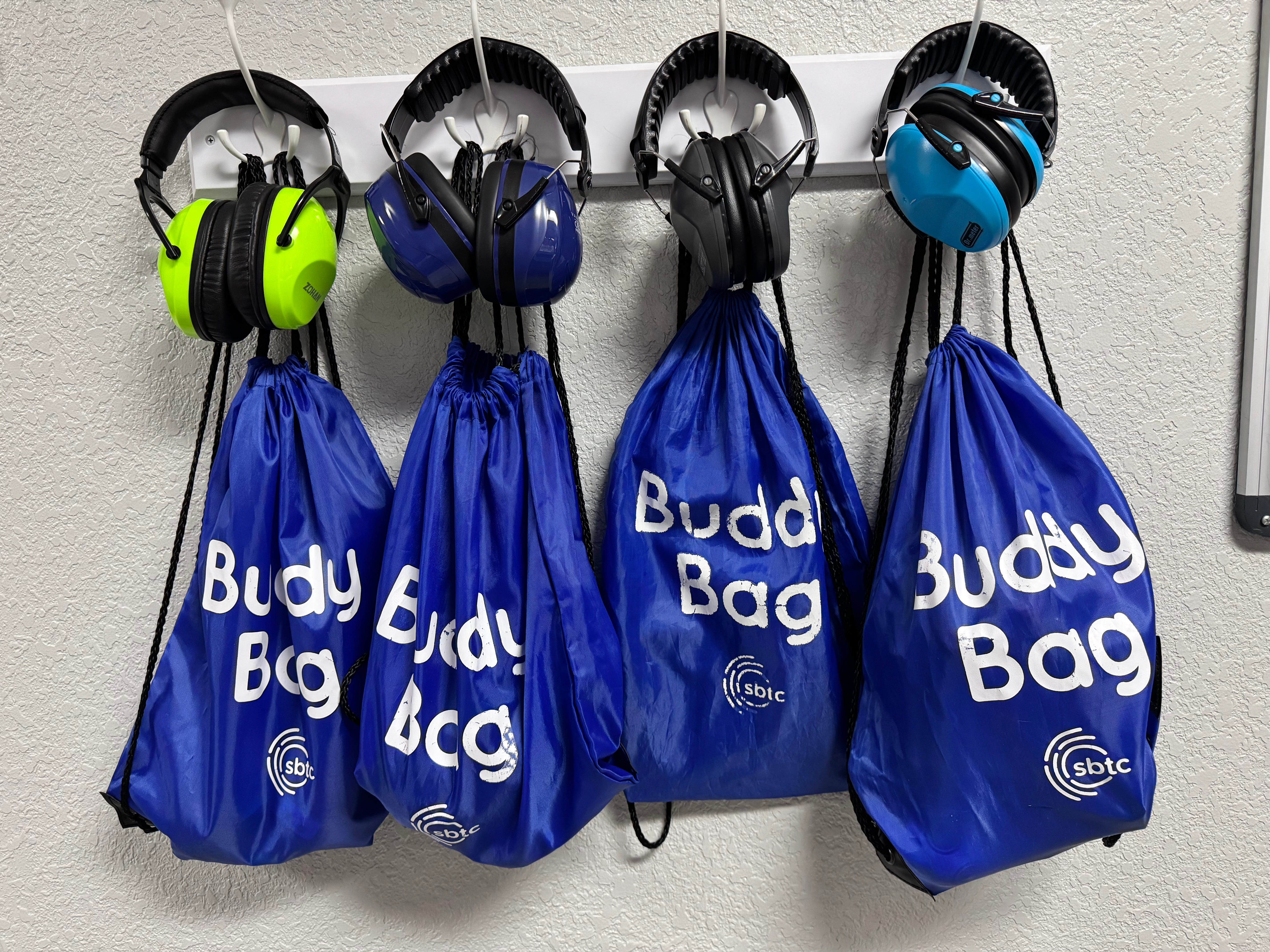
I really like the letter to a pastor, but if I had to take an assignment out, it would be that one. I would replace it with something related to creating a sensory room or choosing items for a buddy bag. My Liberty students do this in a discussion post one week, and it’s very helpful for them to see what other students post.
The guest speakers we had were all great. In the future, I might have a pastor share how he casts a vision for disability inclusion with his congregation (I had that on the schedule, but we ran out of time). I might also include a curriculum designer to talk about adapting the curriculum for different types of learners. We spent a class on discipleship in disability ministry, but a guest speaker on the topic would be helpful.
The week we talked about marketing your ministry, we focused on website design and what parents would look for on a church’s website. I shared a few church websites on the screen and had them tell me where to click to find info about a church’s accessibility. That was really helpful. When we looked at the website for one large church in the Dallas area, I told them that based on what we saw, my family wouldn’t be able to attend there. That seemed to really have an impact.
Another topic that was well received was ethical topics related to disability. We talked about abortion, gene editing, and physician-assisted suicide. I share screenshots of posts from Twitter on the topics so they could see how it’s actually being discussed and presented. It came in week 2, which was early (before we knew each other well and were talking more freely), but they handled the discussion well.
It would be helpful to have a class where we discuss resources they can use after the class, such as parachurch organizations they could contact. I put that on one slide at the end of our discussion on marketing and outreach, but it kinda got overlooked.
I’m so thankful for the opportunity I had to teach this class! Especially because it has led to SWBTS adding a concentration in disability ministry. Students will be able to take four classes in the field of disability ministry in one-week intensives on campus over four semesters. We’ll kick off in the fall with Theological and Biblical Foundations of Disability Ministry. The registration should be up on the SWBTS website this week! I’ll update with a link when I see it. If you know you’re interested, you could start the application process now.
God is working in so many ways to equip churches to better welcome and disciple people with disabilities and their families. If you want to take the next steps to equip yourself to be the strongest ministry leader you can be, come join us at Southwestern Baptist Theological Seminary.
This is Gold.
Thanks for the GCF shout-out!
Should I read the Brian Brock book? I wasn’t familiar with that one.